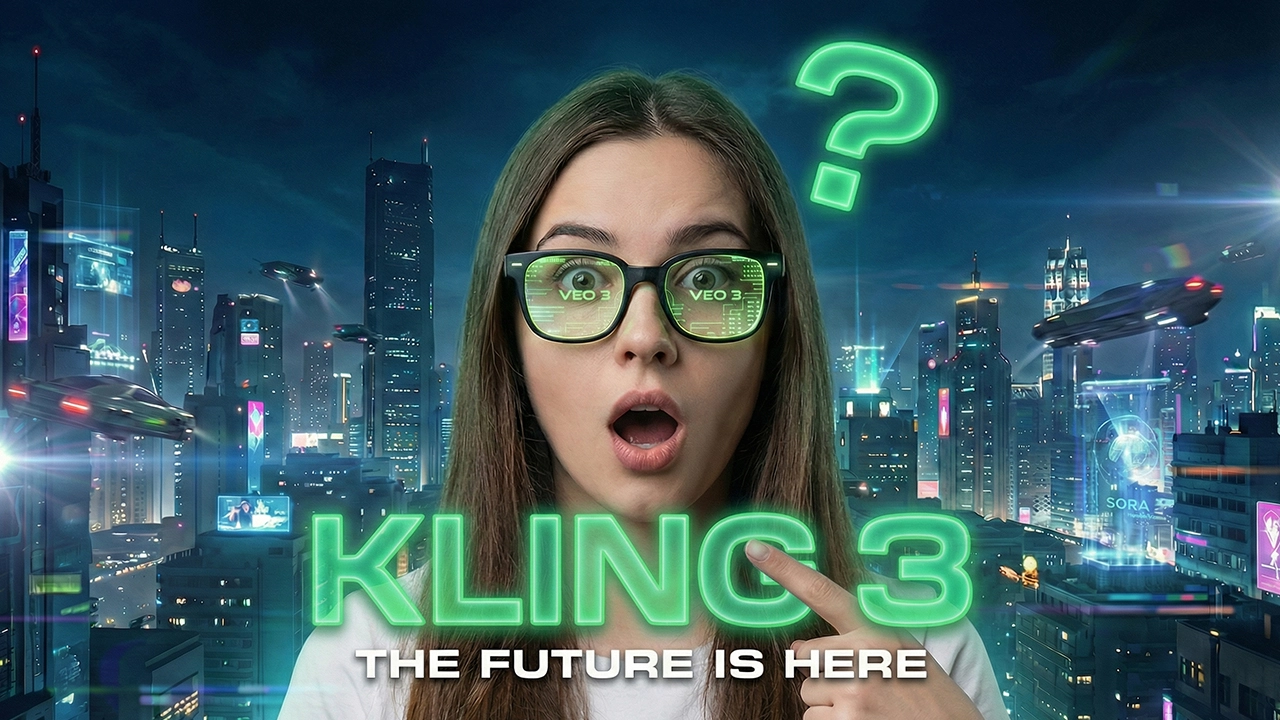
Kling AI Explained in 2026: Kling 1.0 vs 1.5 vs 2.0 — What's the Difference?
Mihaly Varga
Founder & AI Creative Director
Kling AI has rapidly evolved into one of the most discussed AI video generators in 2026. With multiple iterations released — Kling 1.0, Kling 1.5 and now Kling 2.0 — creators are asking the same question: what actually changed between versions, and which one should you use?
Kling 1.0 — The Breakthrough Release
Kling 1.0 introduced high-motion AI video generation with surprisingly realistic physics and character movement. It stood out for dynamic action scenes and longer clip lengths compared to early competitors.
- Strong motion realism for fast-moving scenes
- Better subject animation than early video models
- Longer clip generation than most competitors at launch
- Good environmental lighting simulation
- Limited prompt precision
Kling 1.5 — Stability & Prompt Improvements
Kling 1.5 focused on refinement. Motion artifacts were reduced, subject consistency improved within single generations, and prompt interpretation became more reliable.
- Reduced motion glitches
- Improved temporal consistency
- More accurate prompt-to-video mapping
- Better handling of lighting transitions
- Still limited cross-generation character memory
Kling 2.0 — Cinematic Realism Upgrade
Kling 2.0 significantly upgraded cinematic rendering quality. Depth of field, camera simulation and environmental detail improved noticeably, positioning Kling closer to Sora-level realism in certain scenarios.
- Higher resolution outputs
- More realistic camera simulation
- Improved cloth, smoke and particle physics
- Enhanced color grading realism
- Greater motion coherence in complex scenes
Key Differences Between Kling Versions
- 1.0 focused on dynamic motion capability
- 1.5 improved stability and prompt accuracy
- 2.0 refined cinematic realism and environmental detail
How Kling Compares to Sora and Runway
Kling excels in motion-heavy scenes and action dynamics. Sora leads in large-scale environmental world simulation, while Runway offers superior structured workflow tools and camera path control. Many professional creators combine Kling for action sequences and Runway for precision shots.

Limitations Across All Kling Versions
- No persistent character memory across separate clips
- Text rendering remains inconsistent
- High compute cost for longer clips
- Prompt experimentation still required for precision
- Access tier limitations
Is Kling 2.0 the Best AI Video Tool in 2026?
Kling 2.0 is one of the strongest motion-focused AI video tools available. Whether it's the best depends on your use case: cinematic realism, high-action sequences, or structured content production. The most advanced creators rarely rely on just one tool.