Veo 3 in 2026: What Google's Latest AI Video Model Actually Delivers

Mihaly Varga
Founder & AI Creative Director
Veo 3 marks Google's most ambitious leap in AI video generation. Building on Veo 2, this latest version focuses on cinematic realism, longer clip coherence, and improved prompt fidelity. But does it compete with Sora and Runway in real production workflows?
Veo 2 vs Veo 3: What's New?
- Improved motion consistency across longer clips
- Higher resolution output support
- Better prompt-to-video alignment
- More accurate physics simulation
- Enhanced lighting realism and shadow behavior
- Reduced frame drift in multi-character scenes
Where Veo 2 sometimes struggled with subtle motion artifacts and background instability, Veo 3 significantly refines temporal modeling. Scenes feel more grounded and physically believable.
Core Strengths of Veo 3
- Cinematic camera simulation with realistic lens depth
- Environmental realism with natural lighting gradients
- Better handling of dynamic elements like smoke, water and fabric
- More predictable prompt interpretation
- Improved subject consistency within a single generation
How Veo 3 Compares to Sora and Runway
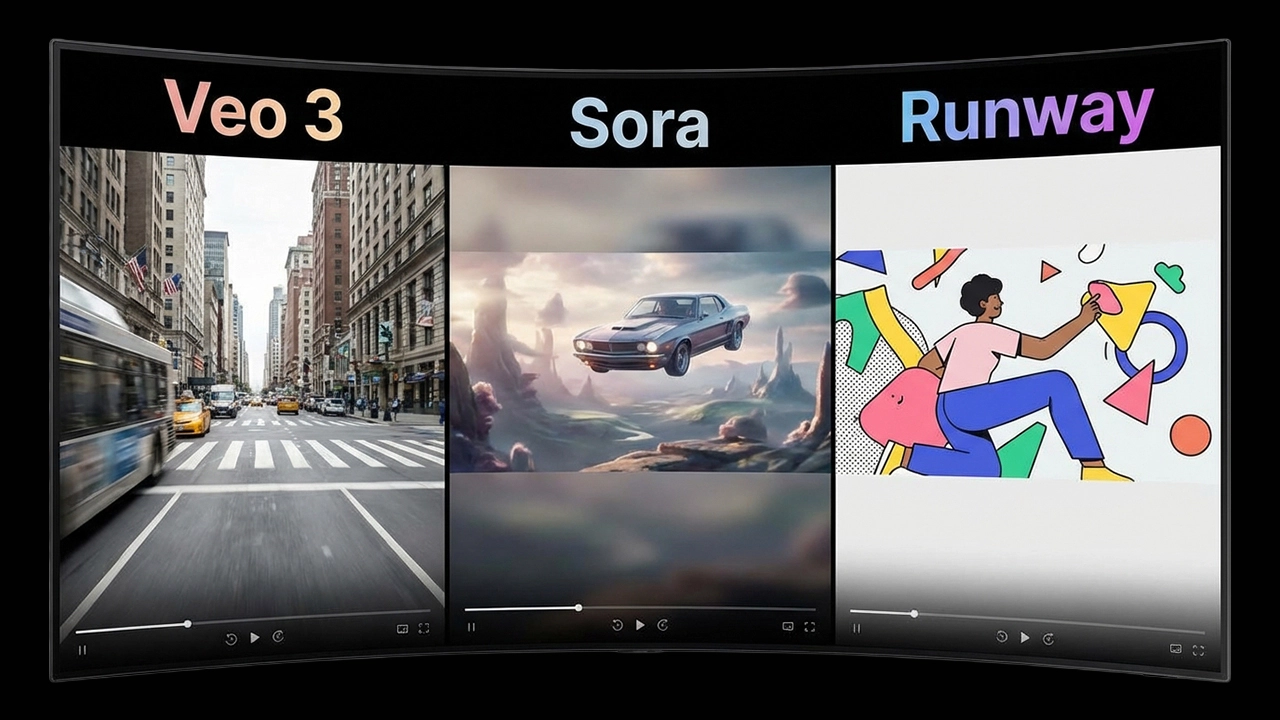
In 2026, Sora still leads in large-scale environmental world simulation. Runway remains strong in direct camera control and structured workflows. Veo 3 positions itself between the two — balancing cinematic realism with improved prompt reliability.
Limitations of Veo 3
- Character identity persistence across separate generations remains limited
- Text rendering inside scenes is inconsistent
- High computational cost
- Availability tied to specific access tiers
- Still requires prompt iteration for precise control
Is Veo 3 the Best AI Video Generator in 2026?
For creators focused on cinematic visuals with improved stability over Veo 2, Veo 3 is a major step forward. However, production workflows often combine Veo 3 with other tools. The best AI video model still depends entirely on your use case.