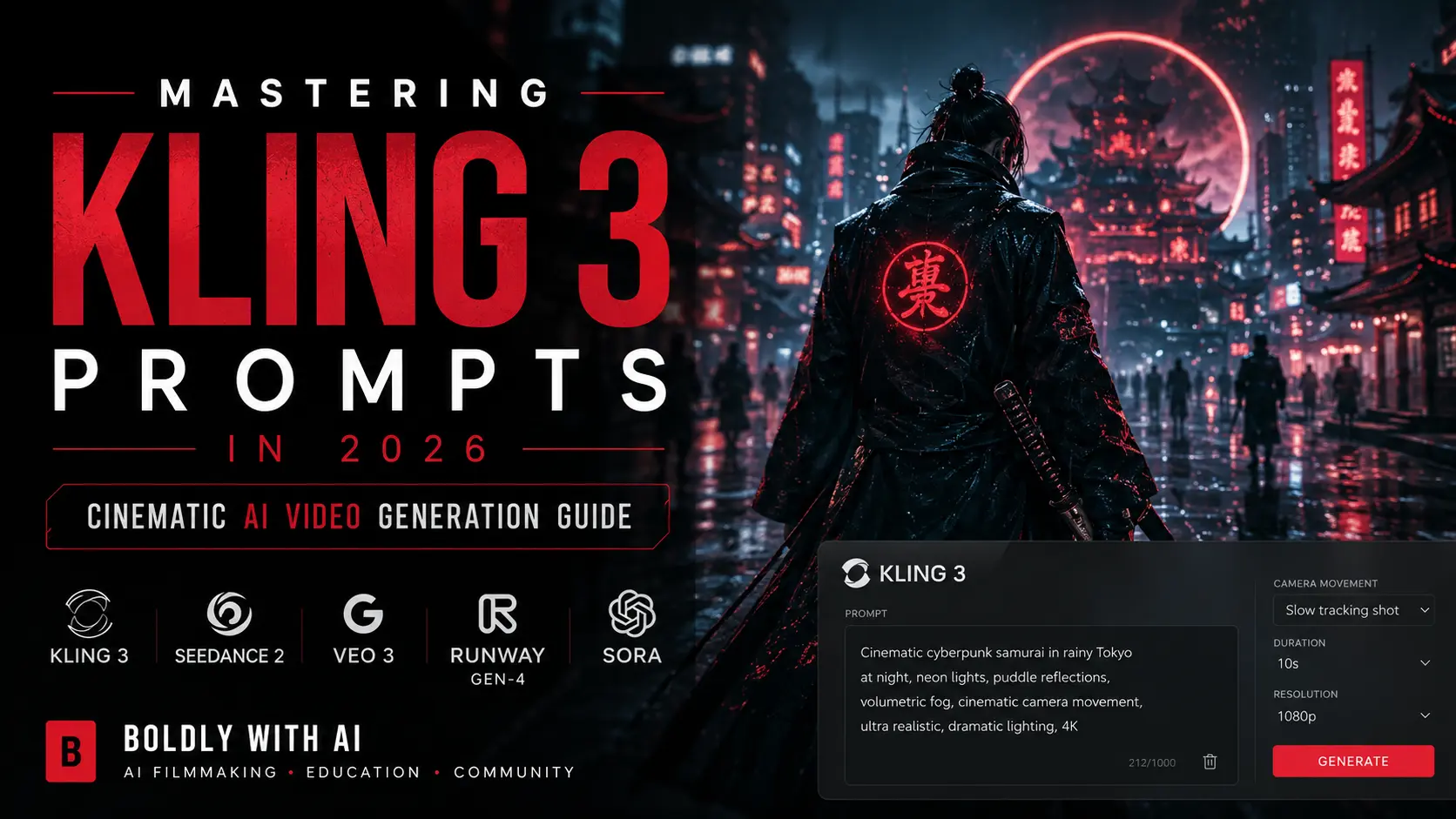
Kling AI vs Seedance vs Sora 2: Full Feature & Price Breakdown

Mihaly Varga
Founder & AI Creative Director
Kling AI, Seedance, and Sora 2 are not interchangeable buttons with different logos. They are different directing instruments. One may feel stronger for kinetic social motion. Another may feel stronger for cinematic continuity. Another may win on accessibility, ecosystem, or a specific storytelling workflow. The right pick depends on the shot, the deadline, and the cost of getting to an approved cut.
This Boldly with AI breakdown compares Kling vs Seedance vs Sora 2 as a production framework for 2026. Pricing pages, regional access, and mode names still move, so we focus on decision criteria that stay useful: creative strengths, weak spots, iteration economics, and when each tool deserves the lead role in your stack.
“Compare tools by the scene they finish — not by the screenshot that looks prettiest in a vacuum.”
— Mihaly Varga, Boldly with AI
Comparison Rules We Are Using
A fair comparison needs boundaries. We are evaluating these engines for creator and small-studio work: shorts, ads, trailer beats, product motion, and cinematic scenelets. We are not crowning a forever winner, and we are not inventing unpublished enterprise discounts.
- Feature fit: camera control, motion quality, reference handling, duration usefulness
- Production fit: identity stability, iteration speed, editability of outputs
- Pricing framework: how cost behaves when you need revisions, not one lucky demo
- Stack fit: whether the tool should be primary, secondary, or situational
If your access, plan, or region differs, translate the framework to your dashboard. The creative logic still holds.
Seedance — Cinematic Direction and Continuous Motion
Seedance is usually the pick when the brief sounds like filmmaking. Creators come to it for camera language, atmosphere, and motion that feels directed rather than merely animated. If your references include trailer energy, character presence, and controlled pacing, Seedance often earns the first generation slot.
Where Seedance tends to win
- Cinematic shorts and mood-driven brand films
- Character entrances and scenelets with deliberate camera moves
- Atmosphere-first storytelling where light and pacing matter
- Workflows that benefit from longer continuous motion as capabilities expand
Watch-outs
- Identity still needs strong references for series work
- Kinetic product-ad chaos is not always its best personality
- Plan-specific duration, audio, and credit math can vary by platform
If Seedance is your lead tool, invest in prompt systems that speak camera and continuity fluently. Pretty adjectives waste cinematic capacity.
Kling AI — Kinetic Motion and Social Punch
Kling often shines when the shot needs energy: product turns, dynamic camera, fashion motion, and short-form clips that must feel alive in the first second. Many creators reach for Kling when the feed demands punch and the brief can tolerate a more aggressive motion personality.
Where Kling tends to win
- Product orbits, unbox-style motion, and ecommerce hero moves
- High-energy social drafts for TikTok, Reels, and Shorts
- Fast ideation when you need motion variants quickly
- Clips where kinetic readability matters more than quiet cinematic restraint
Watch-outs
- More motion energy can mean more cleanup on delicate identity shots
- Not every brief wants aggressive movement — quiet scenes may feel overacted
- As with every tool, commercial terms and export details depend on your plan and platform
Kling rewards clear action verbs and product fidelity references. If your week is mostly short-form commerce or kinetic brand content, it can be the efficient primary.
Sora 2 — Ecosystem Gravity and Broad Storytelling Ambition
Sora 2 sits in a different conversation for many creators: not only model behavior, but ecosystem access, workflow integration, and the kinds of storytelling experiments people expect from OpenAI-class video tools. Depending on your region and account path, availability and packaging can matter as much as raw clip aesthetics.
Where Sora 2 tends to matter
- Creators already working inside OpenAI-centered workflows
- Concept development and story exploration with strong prompt literacy
- Teams that value platform ecosystem continuity alongside generation quality
- Projects where access and integration reduce friction more than a marginal quality delta
Watch-outs
- Access and plan reality can differ sharply by account, region, and timing
- Do not assume one model wins every cinematic or product brief by brand reputation alone
- Always validate rights, usage rules, and export constraints for your commercial case
Treat Sora 2 as a serious contender to test against your actual shot list. Reputation is not a substitute for a side-by-side on your references.
Feature Framework Side by Side
Use this as a briefing chart. Score each tool against your next project, not against the internet's favorite demo.
Cinematic camera language
- Seedance: often strongest default for directed film-like moves and atmosphere
- Kling: capable, with a bias toward energetic motion readability
- Sora 2: strong storytelling ambition — validate on your lens and pacing prompts
Product and logo fidelity
- All three improve with clean image references and simple motion jobs
- Kling is frequently chosen for product-turn workflows in social commerce
- Seedance can look more commercial-film premium when motion stays controlled
- Sora 2 should be tested on your exact packaging — do not generalize from unrelated demos
Short-form virality speed
- Kling: excellent when hooks need kinetic proof fast
- Seedance: excellent when the viral angle is cinematic spectacle or character presence
- Sora 2: useful when your concept lean is narrative or exploratory and access is already smooth
Consistency and series work
None of these tools absolve you from reference discipline. For recurring characters, approve hero stills, limit wardrobe complexity, and avoid stitching unrelated identities. The model that "feels more consistent" on one project can lose that advantage if your references are weak.
Pricing Framework: Think Cost-to-Approved-Cut
List prices matter less than what you spend to reach a publishable or client-approved clip. A cheaper generation that needs eight regenerations and heavy repair can lose to a pricier generation that lands in two takes.
Cost drivers that actually move budgets
- 1Credits or minutes consumed per usable take
- 2Queue time converted into labor cost
- 3Number of regenerations required for identity or product fidelity
- 4Edit time needed to hide artifacts or stitch mismatched clips
- 5Failed experiments that taught nothing reusable
How to compare plans without getting lost
- Estimate monthly output: how many approved shorts, ads, or scenes you need
- Run a one-week pilot on the same three briefs across candidate tools
- Track generations-to-approval and hours-to-approval
- Choose the plan that wins that table, not the one with the flashiest feature bullet
Because public pricing and bundled access change, we recommend recalibrating quarterly. The framework stays; the winner for your studio can rotate by project mix.
“The expensive tool is the one that misses the brief. The invoice is only one part of the bill.”
— Mihaly Varga, Boldly with AI
When to Pick Seedance
Pick Seedance when the deliverable should feel directed and cinematic. Trailer beats, character-led brand films, atmospheric shorts, and scene continuity tests are natural fits. If your creative references come from film language more than from trend templates, start here.
- Primary for cinematic AI filmmaking pipelines
- Secondary for social teams that need occasional premium atmosphere shots
- Pair with strong Seedance prompt packs before buying extra models
When to Pick Kling
Pick Kling when motion energy and rapid social readability are the product. Product marketing, fashion motion, kinetic hooks, and high-tempo brand experiments often land faster here. If your calendar is mostly short-form tests, Kling can be the practical workhorse.
- Primary for ecommerce and kinetic social output
- Secondary for film teams that need punchy insert shots
- Pair with Kling-focused prompts and strict product references
When to Pick Sora 2
Pick Sora 2 when access, ecosystem fit, and storytelling experimentation align with your production reality. If your team already works in that environment, or your concepts benefit from that model's response style on your tests, it can be the right lead — or a powerful second opinion generator.
- Primary when ecosystem friction is low and your tests win on your briefs
- Secondary as a concept explorer beside Seedance or Kling delivery tools
- Always validate commercial usage rules for your specific plan
Recommended Stack Patterns
Solo short-form creator
Choose one primary: Kling for kinetic commerce and trends, Seedance for cinematic personal brand films. Add a second tool only after the first is capacity-constrained or repeatedly losing a specific shot type.
Freelance AI filmmaker
Keep a cinematic lead and a kinetic lead if client mix demands both. Price projects with regeneration headroom. Your margin lives in cost-to-approved-cut, not in owning every subscription logo.
Brand or small studio
Standardize prompt templates, reference folders, and tool assignment by shot type. Consider courses for shared team language, and services support when deadlines exceed internal throughput.
Rights, Watermarks, and Delivery Reality
Feature charts rarely include the boring production blockers: commercial usage terms, watermark rules, export resolution, and whether your client accepts the platform's current licensing language. Those details can disqualify an otherwise beautiful generator for paid work.
Before you standardize Kling, Seedance, or Sora 2 for client delivery, confirm the plan you are actually on — not the plan described in a social media thread. Screenshot your usage terms if needed. Pretty motion does not rescue a rights surprise at invoice time.
Delivery checklist before you lock a primary tool
- Commercial use allowed for your offer type on your current plan
- Export quality acceptable for the destination platform or client master
- No watermark or removable watermark path that matches the brief
- Revision capacity exists inside the monthly budget
- Your editor can ingest the file types without painful re-encode loops
Prompt Transfer Across Models
A good shot brief transfers. A copy-pasted prompt dump often does not. When you move a concept from Seedance to Kling or into a Sora 2 test, keep the subject, action, environment, and camera jobs intact — then retune pacing words and motion intensity for the destination model.
This is why shared prompt libraries still matter in a multi-model world. The library should encode shot structure first and model dialect second. If your only prompts are locked to one tool's quirks, every stack expansion becomes a rewrite project.
A Practical Side-by-Side Test Plan
Before you standardize, run one controlled bake-off. Same references. Same three briefs. Same editing standard. Then decide with evidence.
- 1Brief A: character entrance with locked wardrobe reference
- 2Brief B: product orbit with logo fidelity requirement
- 3Brief C: five-to-eight second cinematic atmosphere hook
- 4Score each tool on first usable take, regenerations, artifact repair time, and final publish confidence
- 5Pick primary and secondary roles from the score sheet
This test prevents tool identity from becoming a personality cult. Your portfolio should decide.
FAQ
Is there a single best tool among Kling, Seedance, and Sora 2?
No. There is a best tool for a shot type and a best stack for a business model. Creators who publish weekly usually need a primary and an occasional specialist, not one absolute champion.
Which is cheapest?
The cheapest on a pricing page is not always cheapest in production. Compare cost-to-approved-cut on your own briefs. Include your time.
Can I use all three?
Yes if the volume justifies it and you assign roles clearly. No if you are paying for three overlapping habits and finishing fewer films.
What should I learn first — tools or prompts?
Prompts and shot design first. Tool fluency second. A weak brief is expensive on every platform.
Where do AI movies fit in this comparison?
Finished AI movie craft shows you what multi-shot continuity actually demands. Watch structure, then choose tools that support the hardest shots in your story — not just the trailer stills.
Kling AI vs Seedance vs Sora 2 is a production casting decision. Cast for the scene, budget for revisions, and keep prompt craft sharp enough that every credit moves you toward an approved cut. That is the only comparison score that matters in 2026.
Comments
Loading…