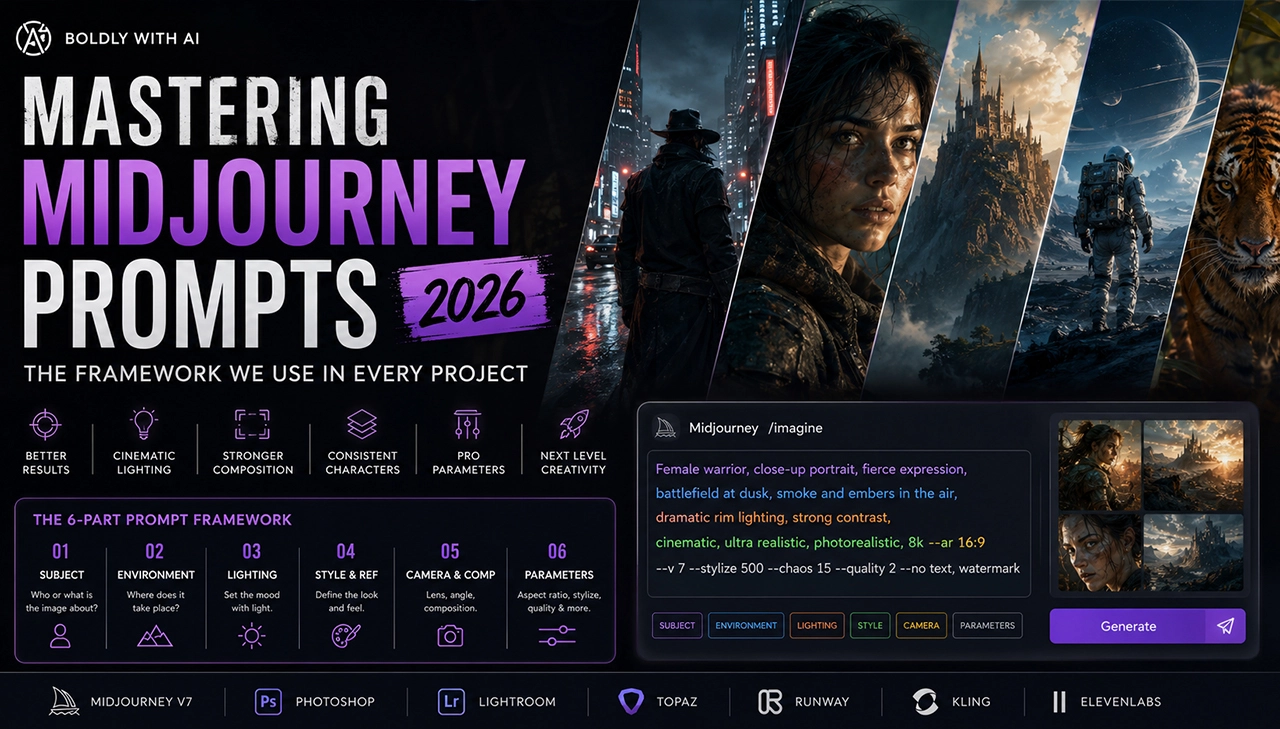
Mastering Midjourney Prompts in 2026: The Exact Framework Behind Cinematic AI Images
Mihaly Varga
Founder & AI Creative Director
Midjourney in 2026 is more powerful than ever. With V7 producing near-production-quality images, the difference between average generations and cinematic masterpieces no longer comes down to luck — it comes down to prompt structure.
After generating tens of thousands of images for AI films, YouTube projects, cinematic trailers, thumbnails, and client work, we've refined a repeatable framework that consistently produces professional-level results.
Why Most Midjourney Prompts Fail
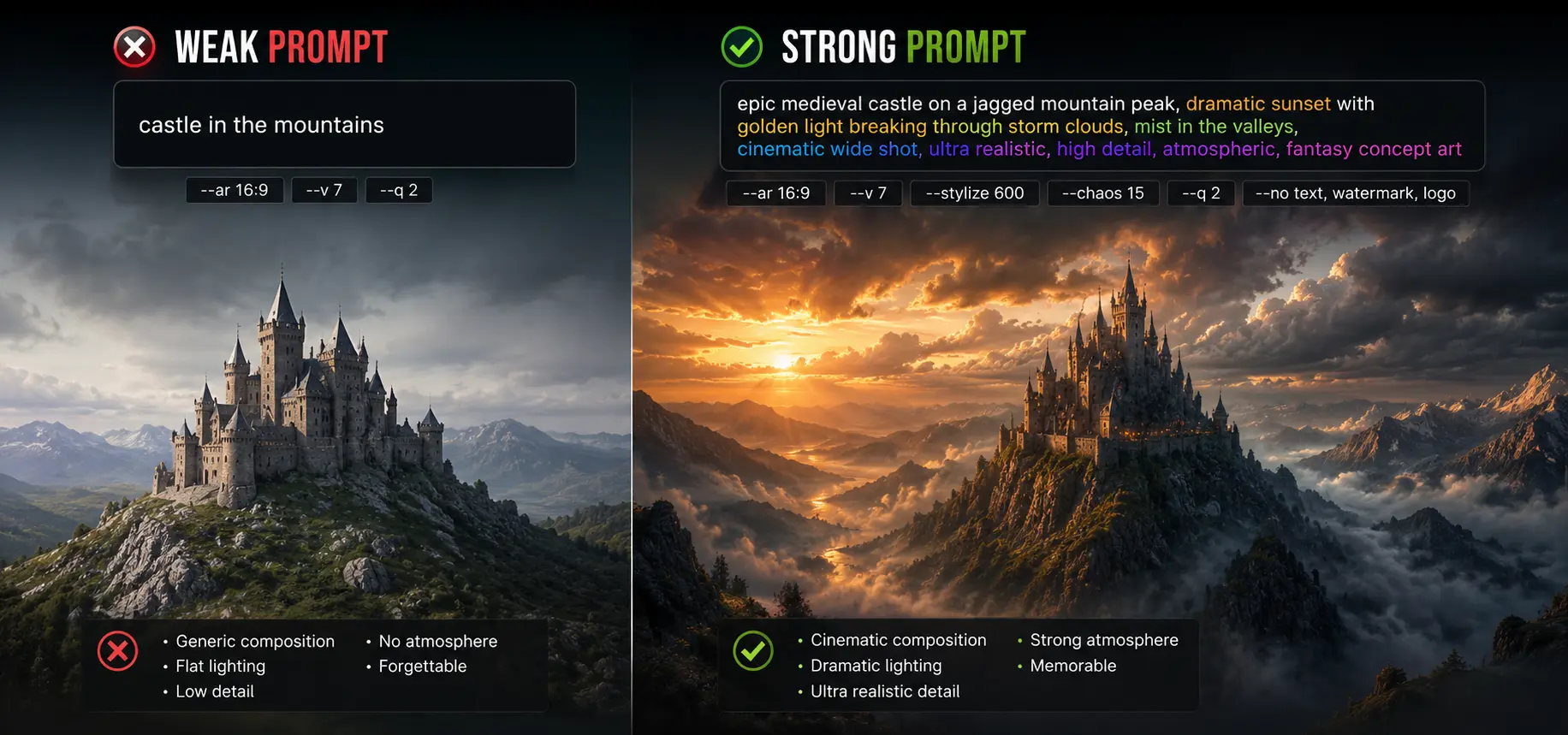
Most creators still write prompts like simple search queries. The result? Flat compositions, inconsistent characters, weak lighting, and generic imagery. Modern AI models respond far better to structured creative direction — almost like communicating with a cinematographer instead of a search engine.
Our 2026 Cinematic Prompt Formula
Nearly every high-performing prompt we use follows the same creative structure. Think of it like a movie production pipeline compressed into a single line of text.
- 1Subject — the character, object, or focal point of the image
- 2Scene & Environment — location, atmosphere, weather, time of day
- 3Cinematic Lighting — the emotional tone created through light
- 4Style & References — visual inspiration, film look, realism level
- 5Camera & Composition — lens type, framing, depth, perspective
- 6Technical Parameters — aspect ratio, stylize, chaos, quality settings
1. Build Strong Subjects
The more specific your subject, the more intentional your image becomes. Instead of writing 'warrior woman', describe visual identity, emotion, framing, clothing, and age. Midjourney V7 responds exceptionally well to cinematic detail and emotional descriptors.
2. Use Lighting Like a Filmmaker
Lighting is still the single most important element in AI image quality. Terms like 'golden hour side lighting', 'volumetric fog', 'neon rim light', 'soft overcast diffusion', and 'practical cinematic lighting' dramatically improve realism and mood.
The best results usually combine 2–3 lighting concepts together rather than relying on one generic term.
“AI doesn't create cinematic images by accident. Direction creates cinematic images.”
— Mihaly, Boldly with AI
The Parameters We Use in Almost Every Prompt
- --ar 16:9 for cinematic scenes and YouTube thumbnails
- --stylize 300-800 for artistic cinematic detail
- --chaos 10-25 for more creative exploration
- --v 7 for the newest Midjourney model quality
- --quality 2 for enhanced detail generation
- --no text, watermark, logo, blurry face
The Biggest 2026 Trend: AI Cinematic Consistency
One of the biggest breakthroughs in modern prompting is character consistency. Creators are now building recurring AI characters for films, YouTube channels, and social media brands using advanced reference workflows and structured prompts.
This changes everything. AI images are no longer isolated artworks — they're becoming scenes from persistent cinematic universes.
Get Our Production-Tested Prompt Packs
We've collected 500+ production-tested Midjourney prompts used in real AI filmmaking projects, thumbnails, cinematic trailers, and viral social content. Every prompt includes the exact parameter settings and creative structure we personally use.
The creators who master prompting in 2026 won't just generate images — they'll direct entire AI-powered worlds.
Comments
Loading…